
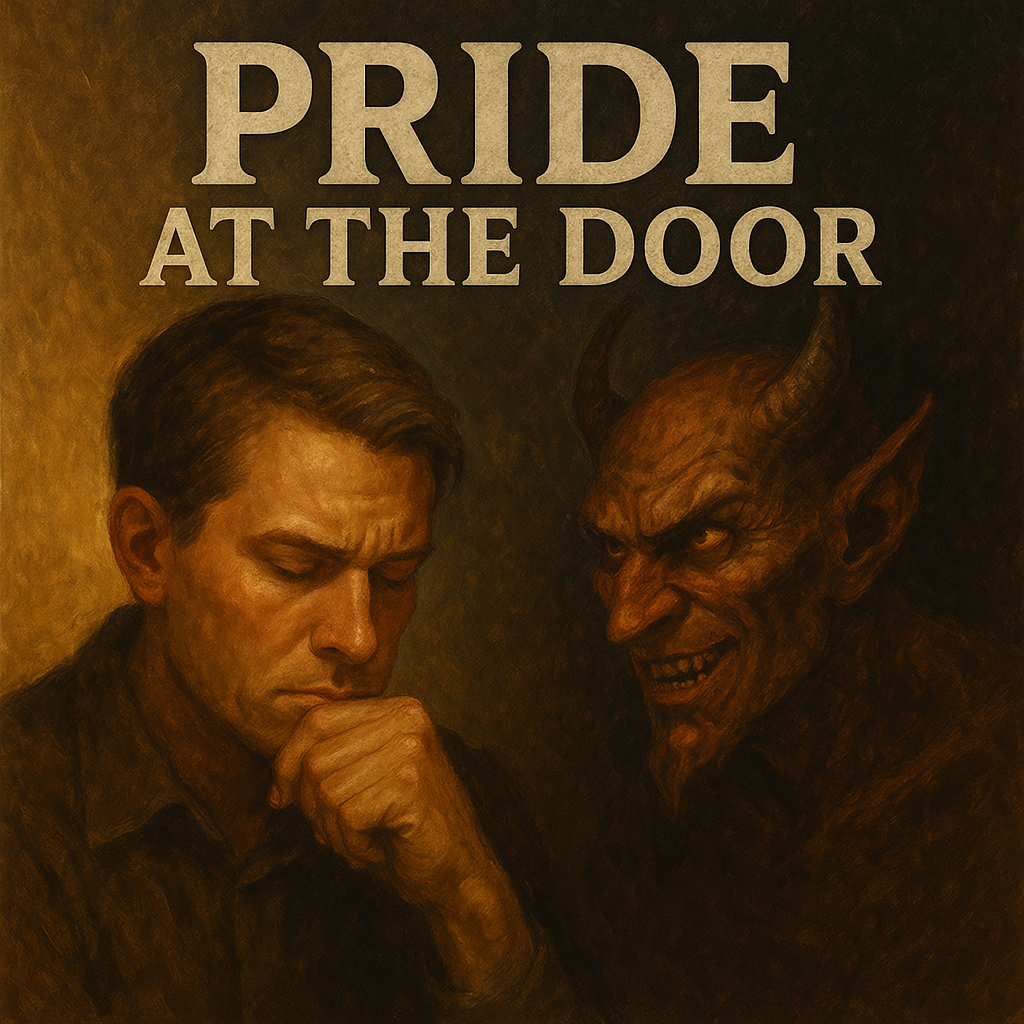
Pride at the Door
As a teacher, I came across a YouTube video about the movie Hacksaw Ridge. It beautifully illustrates how conviction can change our communities. In spite of the difficulties he faces, Desmond Doss holds fast to his beliefs and serves the men around him.
There’s one scene that stays with me. Doss has been court-martialed for refusing an order to carry a gun. Sitting in jail, he questions himself. Am I right? Am I just being prideful? Why am I doing this?
At one of his lowest moments, Doss wrestles with his intentions. His pacifism isn’t pride, it's a private vow. He wants to serve alongside his fellow soldiers, but he refuses to violate the Fifth Commandment. He doesn’t judge those who fight; he simply chooses a different path. His conviction is rooted in humility, not arrogance.
And that question—Am I being prideful?—is one we all need to ask regularly. But there are two common pitfalls.
Pitfall One: Rejecting the Question
We hear the question and dismiss it. Of course I’m not being prideful. My intentions are good. It’s everyone else who is prideful.
But when we brush the question aside, we move forward with blind spots. We hurt others, damage relationships, and even create our own suffering. I’ve seen this in my teaching, my marriage, and with my kids. If we’re honest, we’ve all fallen into this trap.
Pitfall Two: Pondering Without Action
The opposite pitfall is getting stuck in endless reflection.
Sometimes we worry: Will this cause pride to arise in me? The truth is, praise will come when we do well. The question isn’t whether pride will tempt us—it’s how we respond.
St. Paul gives us the answer in Galatians 6:14:
“May I never boast except in the cross of our Lord Jesus Christ, through which the world has been crucified to me, and I to the world.”
If our focus remains on Christ, success comes for the glory of God, not ourselves.
Other times, we hold back because we fear that acting will “harm” someone else. I put “harm” in quotes because often what feels like harm is really love.
A father who takes away his son’s candy after a few pieces may seem cruel in the moment, but he’s protecting his son’s health.
C.S. Lewis paints this vividly in The Great Divorce: the angel kills the lizard, an act that seems harsh, but it transforms the creature into a mighty horse that carries the man to glory. What looks like harm is actually charity.
How to Discern Without Pride
So how do we avoid both pitfalls? Three steps:
- Ask honestly. Bring the question to God: Am I being prideful?
- Seek counsel. Discuss the situation with a spouse, friend, or spiritual director. They can provide clarity that we cannot provide ourselves.
- Act with humility. Move forward, even when it’s hard. Let your focus remain on Christ, and do everything for Him.
This Week’s Practice
- Pick one decision in your life right now.
- Spend five minutes with God asking: Am I being prideful?
- Reflect, seek counsel if needed, then act with humility and courage.
Pride waits at the door of every decision. But humility opens the door to great virtue.
The world needs more men formed in virtue. Forward this to a brother who’s ready to grow.
Member discussion