
The Betrayal We Ignore
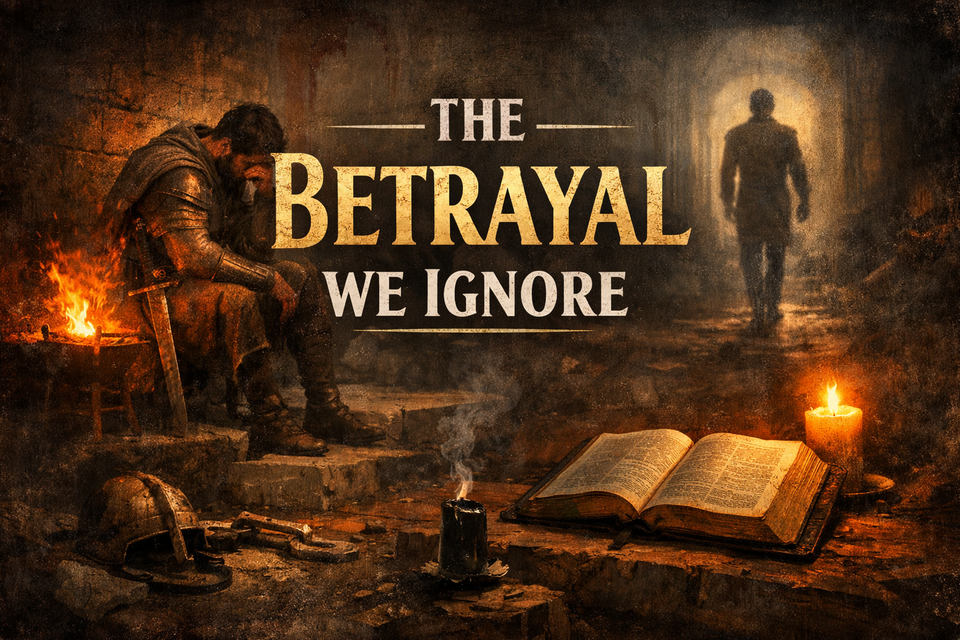
While recently watching Gladiator, I admired the command Maximus had over his troops. He stands before them as a leader they willingly respect and follow—even to death. He has the love of the emperor and is chosen to oversee the transition of Rome.
And yet, at the height of his power, he is betrayed.
Commodus murders his father, takes the throne, and removes the threat Maximus presents. In a moment, Maximus loses everything.
When we step back, it is baffling. A man with that level of leadership, respect, and ability—brought low so quickly.
But this pattern is not unique.
William Wallace is betrayed by the Scottish nobility.
The Jedi are betrayed by one of their own.
It is something we have all lived, or at least know of others who have.
And perhaps the most famous betrayal happens on Holy Thursday.
Jesus has just celebrated the Last Supper—a night He eagerly desired to share with His apostles, and one we still celebrate for the gifts He gave us.
And it is on this very night that He is betrayed by one of His twelve.
The Obvious Danger
There is an obvious lesson here.
We must be aware of the people around us. As we grow and take on responsibility, not everyone will respond well. At times, we even contribute to these fractures ourselves—through pride, harshness, or neglect, like Peter’s treatment of Edmund in Narnia, which helped push him away.
Betrayal from others is real. It happens.
But that is not the greatest danger.
The Deeper Betrayal
There is a deeper betrayal—one that is much easier to ignore.
It is easy to look outward, blame others, and search for threats around us. It even makes us feel better.
“At least I am not like so and so.”
But in doing so, we ignore our own hearts.
As we grow, we all have goals, ideals, and virtues we want to attain. We may sincerely want them, but our actions tell a different story.
We want to lose weight, but we don’t exercise and eat too much junk food.
We want to grow in humility, but we constantly make excuses for our behavior.
We want to lead our family well, but we hardly show them our love.
We gloss over these. We justify them. We delay.
But these betrayals cut deeper than anything done to us. They rob us of the life we could have lived.
We have been given one life. There is no do-over.
The years do not come back.
The time we have already spent is set in stone.
We cannot go back and live our twenties again.
We cannot redo yesterday.
We cannot reclaim the moments we wasted.
All we have is what is in front of us—right now.
And that is what makes this so serious.
Because every day we delay, every time we choose comfort over discipline, every time we ignore what we know we should do—we are shaping the man we are becoming.
Not in theory. In reality.
And that cuts both ways.
We can become men we admire—men of discipline, strength, humility, and love.
Or we can slowly drift into men who make excuses, avoid responsibility, and fall short of what we know we are capable of.
No one drifts into greatness.
It is built, day by day, choice by choice.
So the question is not what kind of man we want to be.
It is what kind of man we are becoming—today, through our actions.
A Simple Challenge
As Holy Week comes to a close, take time to slow down.
Reflect on Good Friday and the love that Jesus has for you.
Then ask honestly:
Where have I betrayed Him?
Where have I betrayed the man I am called to be?
Ask for forgiveness.
And then live that day intentionally.
Forge Ahead
Anvil: the place of formation.
Arrow: the mission we’re sent on.
The world needs more men formed in virtue. Forward this to a brother who’s ready to grow.
Want more? Subscribe to Anvil & Arrow and join a community of men committed to forging strength, virtue, and legacy.
Member discussion