
The Cost of Doing What’s Right
In high school, I had two questions that I liked to ask. The first was, “Would you like to be president?” The second was similar but slightly different: “Would you like to be a king or queen?”
Most of the time, people would say no to the first. I did as well.
It was the second question that made most people think. Regardless of their answer, mine was yes. Looking back, it’s not hard to see why. The president option felt limiting—Congress, the Supreme Court, elections, constant pushback.
Being a king felt different. They had full control and authority. The ability to do what was right without resistance. That’s how I saw it. I trusted myself to do the right thing.
It wasn’t a complete idea, but it was the vision I held onto. Like most young men, I focused on the control, the power, and the prestige.
I didn’t see the cost.
👉 If this resonates, subscribe to Anvil & Arrow for weekly reflections on virtue, leadership, responsibility, faith, and sacrifice.
The Reality of Leadership
There is a darker side of leadership that we don’t often talk about. It’s not just responsibility or pressure. It’s the cost.
The cost of being misunderstood.
The cost of upsetting people.
The cost of doing what’s right when others don’t agree.
This is where many men struggle—not because they don’t know what’s right, but because they know what it might cost them.
The Dark Knight’s Choice
This is shown clearly in The Dark Knight. Bruce Wayne has become the hero of Gotham. Crime is down, and the city has hope.
Then the Joker steps in, and everything changes.
Bruce is forced into decisions that don’t have easy answers. At one point, he uses invasive technology to track the Joker. It works, but it crosses a line and it upsets Lucius Fox, one of his closest allies.
Bruce does it anyway, knowing it is the only solution.
At the same time, Bruce isn’t trying to hold onto power. He is willing to step aside if the right leader comes along. He sees that in Harvey Dent. Bruce is a leader who is willing to concede his position to the right man, the right leader.
Dent seemed to be that man.
But he falls.
He gives in to despair and rage, becoming the very thing he once stood against. Now Gotham is at risk of losing everything that had been built.
So Bruce makes a decision.
He takes the blame. Batman becomes the villain so that Gotham can keep its white knight.
The Cost No One Sees
That decision costs him everything. His reputation. His honor. His place in the city. And maybe the hardest part—no one understands why he did it. They don’t see the sacrifice. They don’t see the reasoning.
They just see a criminal.
This is the part of leadership we don’t think about. Doing what’s right doesn’t always lead to respect. Sometimes it leads to misunderstanding. Sometimes it leads to standing alone.
The Choice Every Man Faces
At some point, every man who steps into leadership faces this question:
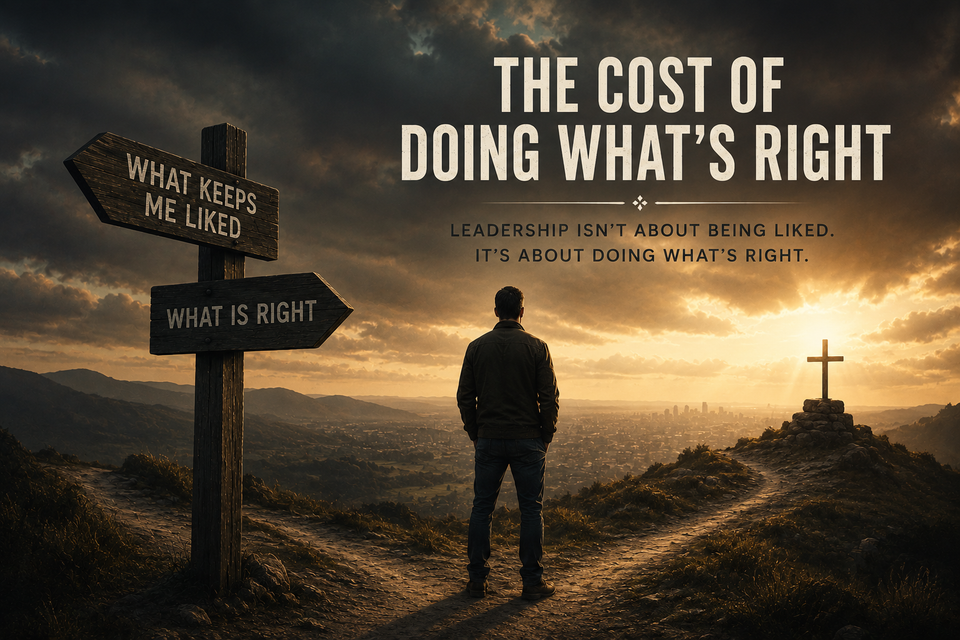
Do I do what’s right, or do I do what keeps me liked?
Most men respond in one of two ways. Some chase approval, doing whatever it takes to keep everyone happy—even if it means compromising their principles. Others swing the other direction and ignore everyone around them completely.
Neither is right.
As with most things, the virtue lies in the middle.
A good leader listens. He seeks input from the people around him because he knows he has blind spots. That simple act can prevent costly mistakes. But listening doesn’t remove the responsibility to decide.
At the end of the day, the decision is still his—and it has to be grounded in what is right.
Then comes the part many leaders overlook: how the decision is presented. Even a good decision can fall apart if it’s communicated poorly. It takes time and experience to do this well, but it starts with recognizing the concerns of others and helping them understand the reasoning behind the decision.
And even if all of that is done well, people may still disagree.
That’s the reality.
There are moments when doing what’s right will cost you approval—and sometimes even relationships.
That’s the cost of leadership.
Not Meant to Be Carried Alone
That cost can wear you down if you try to carry it alone.
That’s where a lot of leaders struggle—not just making the decision, but in dealing with the weight afterward.
The answer isn’t to avoid leadership. It’s to make sure you’re not alone in it.
First, your relationship with God. He steadies you when everything else feels unstable.
Second, people you trust outside of what you’re leading. People you can talk to honestly and get perspective from.
Leadership can be lonely, but it doesn’t have to be isolating.
Weekly Challenge
This week, pay attention to one thing:
Where are you choosing to be liked instead of doing what’s right?
It might be avoiding a hard conversation, holding back the truth, or making a decision you know isn’t right just to keep the peace.
Don’t ignore the people around you. Good leaders listen.
But they don’t hide behind approval either.
Take one step this week—say what needs to be said, make the decision you’ve been avoiding, and stand firm, even if it costs you something.
Because leadership isn’t tested when everyone agrees with you.
It’s tested when they don’t.
Next Week
Next week, we’ll look at The Dark Knight Rises and the purpose of aging, legacy, and passing on the burden. Because strength was never meant to end with us. At some point, every man must learn not only how to rise—but how to prepare the next generation to carry the mission forward.
Forge Ahead
Anvil: the place of formation.
Arrow: the mission we’re sent on.
The world needs more men formed in virtue. Forward this to a brother who’s ready to grow.
Want more? Subscribe to Anvil & Arrow and join a community of men committed to forging strength, virtue, and legacy.
Member discussion