
The Crown Belongs to God
During the Christmas season, I went to the movies with my family to see David. The film follows the rise of David from his anointing to his crowning as King of Israel. Along the way, David faces many trials—soothing Saul with the harp, standing against Goliath, and fighting Israel’s enemies. It is a story about power—but more importantly, about how men choose to hold it.
One of the most revealing moments in the story doesn’t belong to David or Saul.
It belongs to Jonathan.
When Saul realizes that David has been anointed as the next king, jealousy consumes him. He turns violent, accuses David of treason, and even commands his own son, Jonathan, to kill him. Saul makes the stakes clear:
David’s life threatens Jonathan’s crown.
Jonathan faces a choice few men ever willingly face. He can protect his future power—or he can protect what is right. Jonathan chooses to help David escape and later tells his father a simple but profound truth:
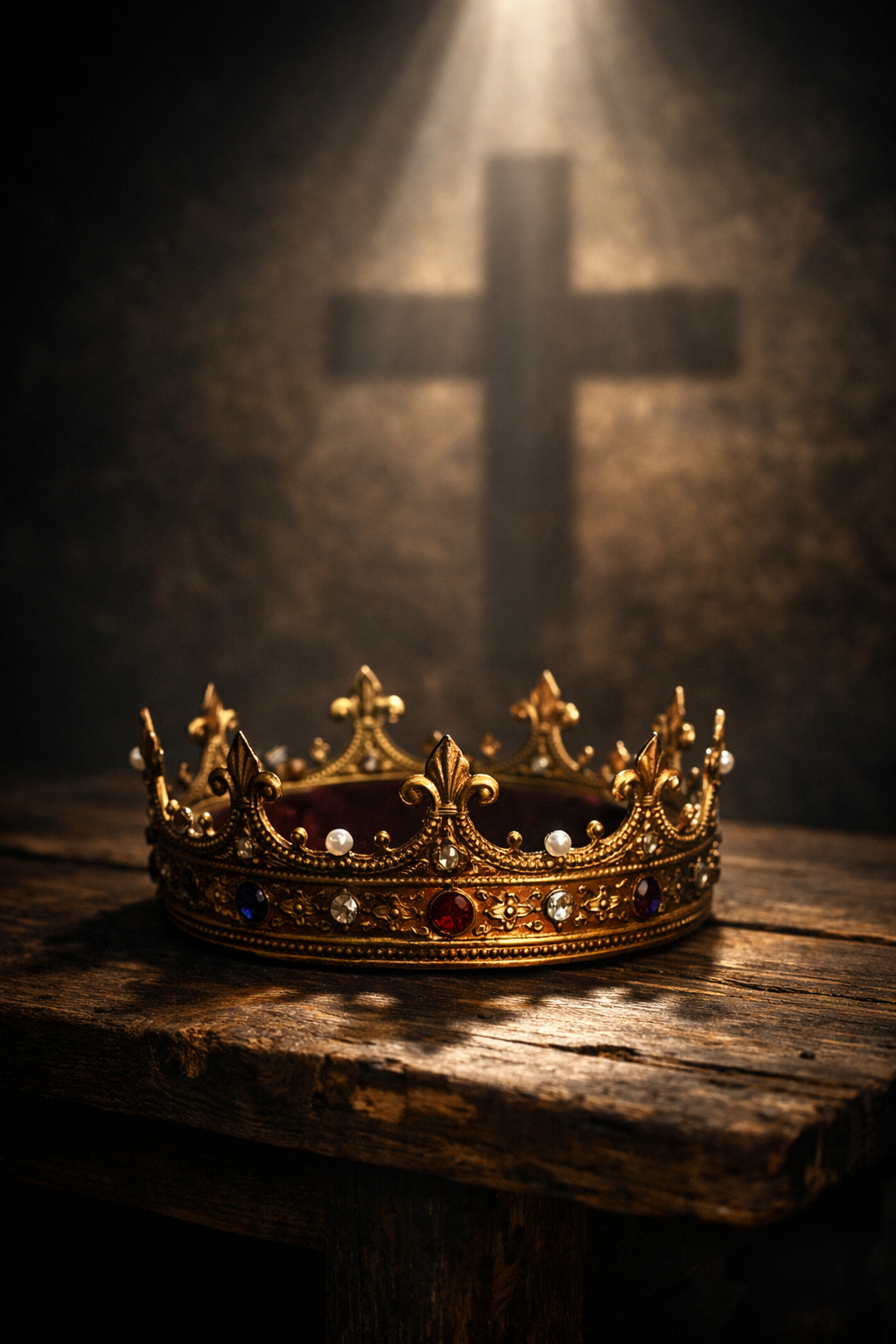
The crown belongs to God.
Who Owns the Crown?
That phrase is worth sitting with.
Who owns our titles, our authority, our influence, our success?
Do they belong to us—or are they entrusted to us for a time?
And does the answer actually matter?
This question matters because it changes everything.
The Saul Temptation
If we believe the crown is ours, we will fight to protect it. We will cling to our position, our status, and our control until age, illness, or death rips it from our hands.
When threatened, we become like Saul—
defensive, suspicious, and willing to harm others to preserve what we think is ours.
In today’s world, this is the default posture. We give blood, sweat, and tears to achieve something, finally attain it, and then grip it tightly. We take our fill and move on.
But the hard truth remains: we will die. We will take nothing with us. Titles fade. Wealth is divided. Power passes on.
A life spent clutching the crown ends with empty hands.
Freedom in Letting Go
But if we accept the truth—that the crown belongs to God—we are freed.
The roles we hold are not permanent possessions. They are temporary responsibilities.
Fatherhood changes as children grow.
Leaders must eventually step aside.
No one is meant to carry the same burden forever.
What others may view as a loss,
we see as a beautiful design.
From Holding Power to Forming Men
When we loosen our grip on the crown, our mission changes.
Instead of defending our position, we begin preparing successors.
We stop asking, How do I stay on top?
And start asking, Who am I forming to take my place?
A healthy leader understands this truth:
The current generation will not lead forever.
Our duty is to teach, equip, and empower those who will come after us.
A Living Example
I’ve seen this firsthand in my own work. My boss and mentor is not threatened by those he leads. Instead of guarding his position, he actively looks for and builds up replacements.
He understands that his role is not something to hoard, but something to steward well—and then pass on stronger than he received it.
His leadership leaves a true legacy in the world. A gift to future generations.
Jonathan’s Legacy
This is the contrast revealed in Jonathan.
He could have fought for a crown that was never truly his to begin with. Instead, he surrendered it to God and chose faithfulness over ambition.
Even when we make this shift, pride does not disappear. It whispers the same lie:
No one else can do this as well as you.
That lie must be resisted.
Leadership is a blessing for us to steward, pass on, and lay down when the time comes.
A Question Worth Asking
Take time this week to reflect on your crown.
Do you treat it as something you own—
or something you’ve been entrusted with for a season?
Forge Ahead
Anvil: the place of formation.
Arrow: the mission we’re sent on.
The world needs more men formed in virtue. Forward this to a brother who’s ready to grow.
Want more? Subscribe to Anvil & Arrow and join a community of men committed to forging strength, virtue, and legacy.
Member discussion