
Why Men Must Learn to Follow
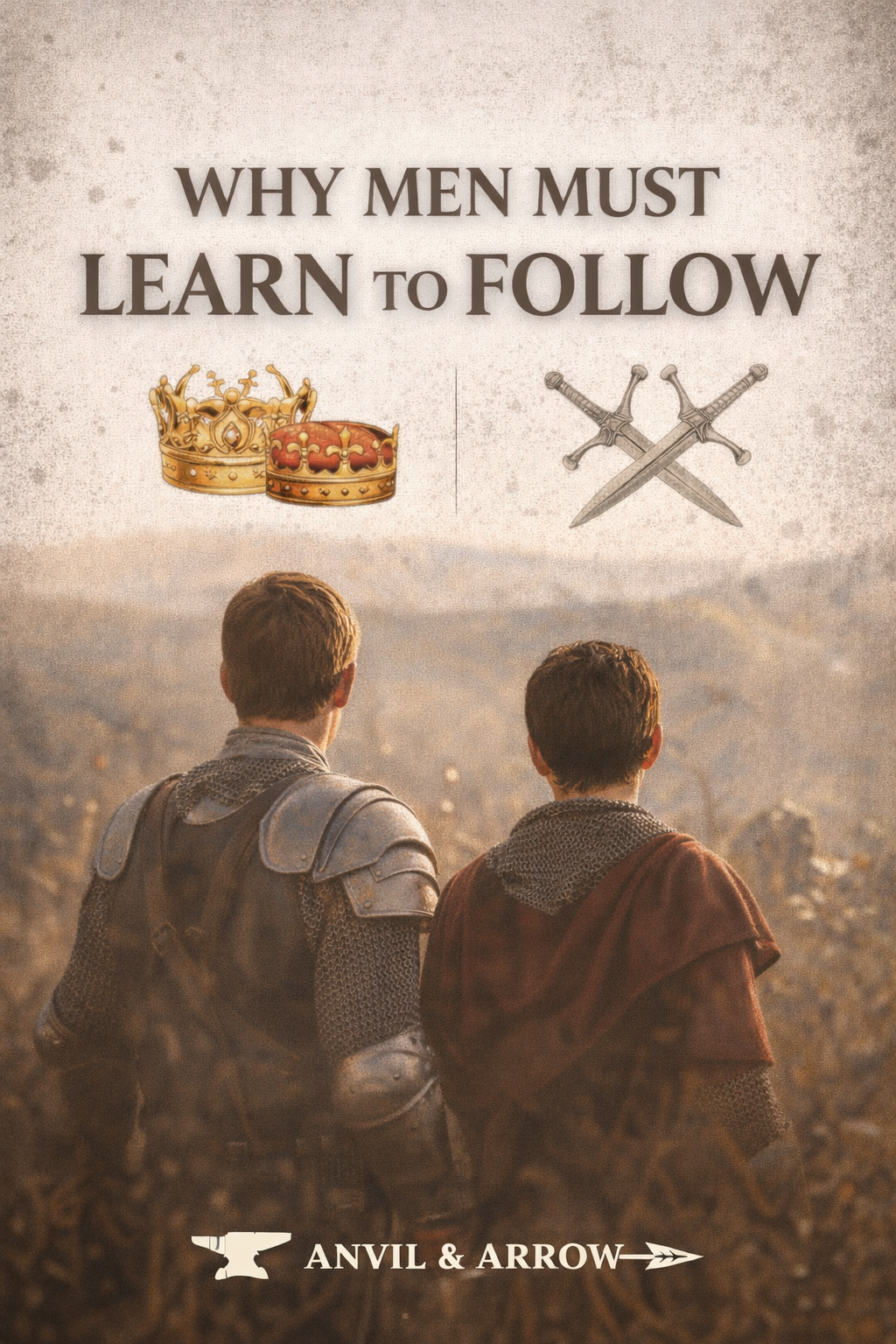
The Lion, the Witch, and the Wardrobe quickly became one of my favorite stories when it was released as a film. It had kings and queens, battles, scheming, sword fights—everything an eleven-year-old boy could want.
I always admired Peter. I wanted to be like him: strong, decisive, noble. As much as I revered Peter, I disliked Edmund. Edmund refused to listen to his wiser brother. He lied. He was willing to sacrifice his family for his own desires.
For years, I saw myself as Peter.
Then, while working in a factory, I had an uncomfortable realization.
I was Edmund.
Wanting Authority Without Formation
Edmund is a boy who wants to be king. He wants authority. He wants recognition. He believes he could lead better than Peter.
The problem is that Edmund has little formation. He has ambition, but not discipline. Desire, but not virtue. Instead of submitting himself to growth, he blames others. He convinces himself that if only he were given the chance, he would excel.
That pattern was painfully familiar.
My Own Pattern of Refusal
This was me well into my late twenties. I encountered leaders I believed were flawed—and many of them were. But instead of learning how to follow well, I looked for ways to replace them or bypass them entirely.
In Boy Scouts, I gathered other boys and attempted to form our own patrol so we could govern ourselves.
In a men’s soccer league, I joined a team with a captain—Jon—who was widely disliked. He was a strong player, but the team didn’t respect him. He trusted me to help organize the squad and prepare for the season. When players began saying they didn’t want to play under his leadership, I saw an opportunity.
I took his players, formed my own team, and left him behind.
I betrayed him—just as Edmund betrayed Peter.
As a teacher, I worked under principals I disagreed with. I spoke poorly of them to colleagues and encouraged others to leave rather than endure flawed leadership.
In every case, I focused on their weaknesses and ignored the weight of their responsibility. My ego grew. My charity shrank. I wanted to be noble like Peter, but I was grasping like Edmund.
Learning to Follow
One of the greatest graces in my life was working in a factory.
There, all my grand ideas of leadership were stripped away. I was not going to become a manager. I wasn’t going to rise quickly. I had no choice but to learn how to follow.
Regardless of whether my leaders were good or bad, I had to master myself. I had to show up, work well, support the mission, and endure difficulty without bitterness. I had to learn patience, humility, and obedience.
During that same season, I listened to The Dolorous Passion by Blessed Anne Catherine Emmerich. I listened to the suffering of Christ—the God of the universe—who willingly submitted under unjust authorities for the sake of our redemption.
If He could suffer patiently and lovingly under poor leadership, I could learn to do the same.
Redemption Through Right Submission
This mirrors Edmund’s story.
Edmund is saved because Aslan sacrifices Himself in Edmund’s place. Edmund is given a second chance. This time, he learns to follow Peter. He submits himself to proper authority. He grows in discipline and loyalty.
And when the moment comes—when Peter is in danger—Edmund disobeys him for the right reason. He breaks the White Witch’s staff and sacrifices himself to save his brother.
This is what good followership produces.
It isn't passive or blind obedience.
It is discernment, courage, and sacrifice.
The Strength to Follow
This is the kind of follower I need to be. It is the kind of follower every good leader desires. And it is a crucial stage in becoming a man.
Many of us want to lead. But there can only be a few leaders. For every leader, there must be many followers—and the quality of those followers will determine whether the mission succeeds or collapses.
We can support leaders with charity, speak truth with humility, and pray for their protection.
Or we can put ourselves first—magnifying flaws, undermining authority, and quietly destroying what is being built.
A Question Worth Asking
What kind of follower will you be?
And how will you support the mission you’ve been entrusted with?
Forge Ahead
Anvil: the place of formation.
Arrow: the mission we’re sent on.
The world needs more men formed in virtue.
Forward this to a brother who’s ready to grow.
Want more? Subscribe to Anvil & Arrow and join a community of men committed to forging strength, virtue, and legacy.
Member discussion