
The Problem of Pain
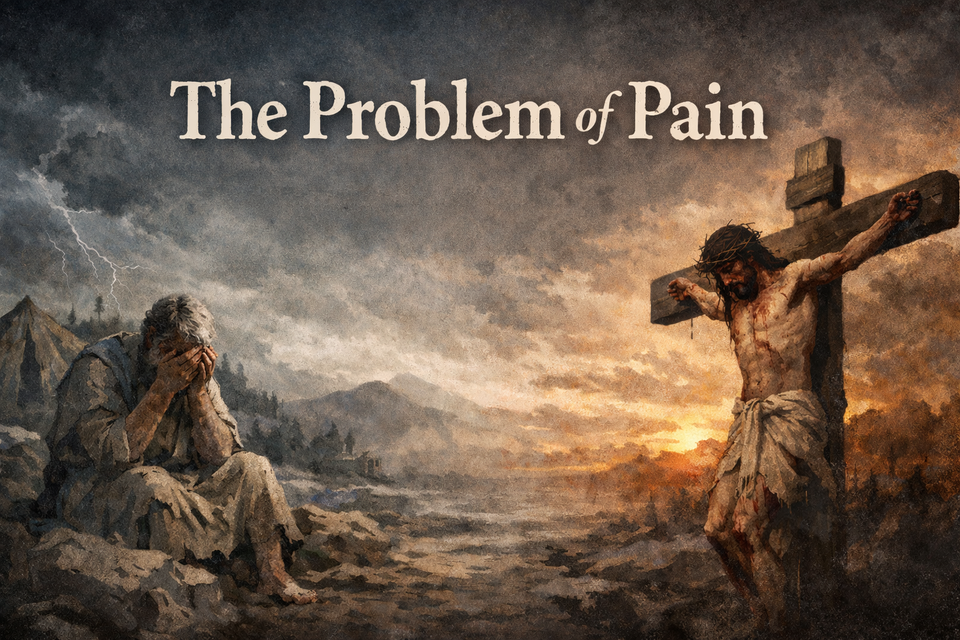
When I joined an atheist/theist discussion group, one objection came up constantly:
If God is good, why does He allow so much suffering?
People pointed to horrific crimes. Innocent victims. Children harmed. They would say, Any decent person who knew this was about to happen would stop it.
It’s a serious question. And one that deserves more than a shallow answer.
Many theologians have tackled it well. One that helped me deeply was The Problem of Pain by C. S. Lewis. If you’ve never read it, start there.
But instead of trying to out-argue anyone here, I want to look at something simpler: the story of Job.
Job and the Question of “Why?”
Job is a righteous man. He has done everything right in life, yet God allows the devil to remove the blessings He had given.
At first, Job accepts it. But as more calamities befall him, he begins to ask why.
His friends offer the standard explanation: you must have done something wrong. This is punishment. Despite Job’s insistence that he is innocent, they continue to press him.
Eventually, God enters the conversation.
The response we receive is not what I would have expected.
God asks Job where he was when the earth was formed. He asks whether Job can command the morning or govern creation. At first glance, it can seem heartless. God has allowed an innocent man to suffer deeply — and this is His answer?
But reflecting further, I began to see what God was saying.
He is showing Job that He is far greater than we are. He formed the world, sustains everything, and sees realities we cannot. There is more happening than we understand.
That truth can be unsettling. If God wanted, He could constantly torment us, making our lives miserable like the gods of Greek mythology.
But He doesn’t.
Instead, throughout the Old Testament, we see a God who disciplines, refines, and ultimately protects His people — even when the path is painful.
The Fulfillment in Christ
This reality culminates in Jesus and the Passion.
God allows Himself — the Creator, Sustainer of all things, completely innocent — to die on a cross. And He does so with love in His heart for us during the entire Passion.
This changes the problem of pain.
It is no longer simply, “Why does He allow it?”
Instead, it becomes, “What is He trying to teach us through it?”
Pain, much like our limitations, is not always what it first appears to be. It can motivate change. It can remove our unhealthy attachment to the world. It can purify our love.
This Lent, let’s not immediately shy away from the pain of life. Instead, let’s try to embrace it as Jesus Himself did — trusting that the God who allows suffering is also the God who entered into it.
Applying it to this week, take one frustration, one inconvenience, or one real sorrow you are carrying and bring it intentionally into prayer. Instead of asking only “Why?”, try asking, “What are You forming in me through this?” Sit with the question. Don’t rush to solve it. Trust that God sees more than you do.
Forge Ahead
Anvil: the place of formation.
Arrow: the mission we’re sent on.
The world needs more men formed in virtue.
Forward this to a brother who’s ready to grow.
Want more? Subscribe to Anvil & Arrow and join a community of men committed to forging strength, virtue, and legacy.
Member discussion